Search This Blog

Showing posts with label Decorating. Show all posts

Tuesday, 22 March 2011

Campaign Furniture

I just might have India on the brain, seeing as how I recently posted on British Colonial decorating (which you can read about here) and am now writing about campaign furniture.   I have always loved the dark wood and simple lines that make campaign furniture pieces as elegant and useful today as they were for their original purpose.


Teak writing desk from India with removable legs (source: Manner of Style)


Campaign furniture was originally developed for the British army in the 1700s. During the Georgian and Victorian (1714-1901) periods in England, British officers of high social position would expect to enjoy some of the same comforts of home when they were out in military camps.   In order to assure themselves of as high a degree of comfort as possible special collapsible furniture became popular.  The furniture was designed to not only be elegant and comfortable, but to fold up and break apart and then be reassembled without needing nails and screws to hold it together.  The furniture also had to be light enough to be carried (by their attending servants that is).  They were stylish travel furniture in other words.   

Collapsible 19th Century Anglo-Indian hardwood campaign bed (Christie's)


One of the most well-known pieces of campaign furniture is the Wellington Chest (see the photo below), originally designed for the 1st Duke of Wellington, but still very popular today.  It has six to twelve drawers of equal depth and the right side panel opens for storage.  When the panel is closed, it overlaps with the drawers to keep them secure for travel.
Wellington Chest (Antiques Atlas)


19th Century Wellington Chest open to show the drawers and, in this case, a writing shelf (Antiques Atlas)


There were chests and beds and desks and chairs and tables:  pretty much any piece of furniture needed to make living conditions comfortable.

Campaign desk from the 1820s - note the handles on the sides to carry each section (The Buzz on Antiques)


Collapsible washstand c. 1830s (CINOA)


The White Dresser

Campaign dresser and boxes (The White Dresser)


The Roorkhe chair (shown in the photo below), named after the headquarters of the Indian Army Corps of Engineers in India, was used by the British military officers from the 1890s to the beginning of WWII.  Not only was this chair comfortable, portable, light-weight, and strong, but it was also stable on uneven ground.  The chair was constructed of individual wood pieces that fit into each other loosely and were held together by the leather arms and the leather or canvas seat.  The tension created on the arms and seat of the chair when someone sat on the chair, kept the whole structure in place and at the same time allowed for it to adjust to uneven ground.
Tree Hugger


Isn't this gentleman lovely - taking a bit of a rest in his elegant Roorkhe chair wearing his knee socks, pith helmet and linen suit.


Lieutenant-Colonel Jim Corbett sitting in a Roorkhe chair in Corbett National Park, India in 1936 (Coworkout)


Campaign furniture was so well suited for life on the road, that it also became popular for use while traveling and on safaris.  


Have a look at the gorgeous romanticized version of campaign furniture in a safari tent,


Roar Africa
and on a picnic in Africa.  


Roar Africa
Yep that's my kind of traveling!
Linked to Open House Party at No Minimalist Here,
Furniture Feature Friday at Miss Mustard Seed,
Saturday Night Spotlight at Love Where you Live

Monday, 14 March 2011

Is It Wrong to Decorate with Beer Bottles?

Decorating with beer bottles really is a win-win situation.  Hubby is happy to drink the contents and then I soak off the label and put some pussy willows in the empty bottles for the mantel.  


Aren't the bottles lovely with the St. Peter's Brewery seal pressed into them.


I love watching pussy willows emerge in the spring.  They seemed just the thing to put out on our mantel right now.

Linked to Countdown to Spring Party at Domestically Speaking
and Metamorphasis Monday at Between Naps on the Porch
and Spring Mantel Party at Women Who Do it All

Saturday, 12 March 2011

In Need of Some Touches of Spring

At this time of year I'm always craving some touches of spring.  I'm tired of winter, but here in Canada it still looks pretty wintery outside so I have to do the next best thing - add some spring inside.  


Here are eight ways you can add a touch of spring to your home - even when it is still cold and snowy outside.


1. Add some spring flowering branches - cutting spring flowering branches and forcing their blooms is a time-honoured right-of-passage to welcome spring.   Pussy willows and  forsythias are the easiest to force, but you can also use flowering almond, flowering quince, magnolia, redbud, cherry, pear, and apple.

Style at Home
2. Buy some spring flowers - Every year at this time I buy a pot or two of spring bulbs to enjoy or a bouquet of cut tulips or daffodils to arrange in a vase.  They have a powerful way of bringing a room to life.

Style at Home


Martha Stewart


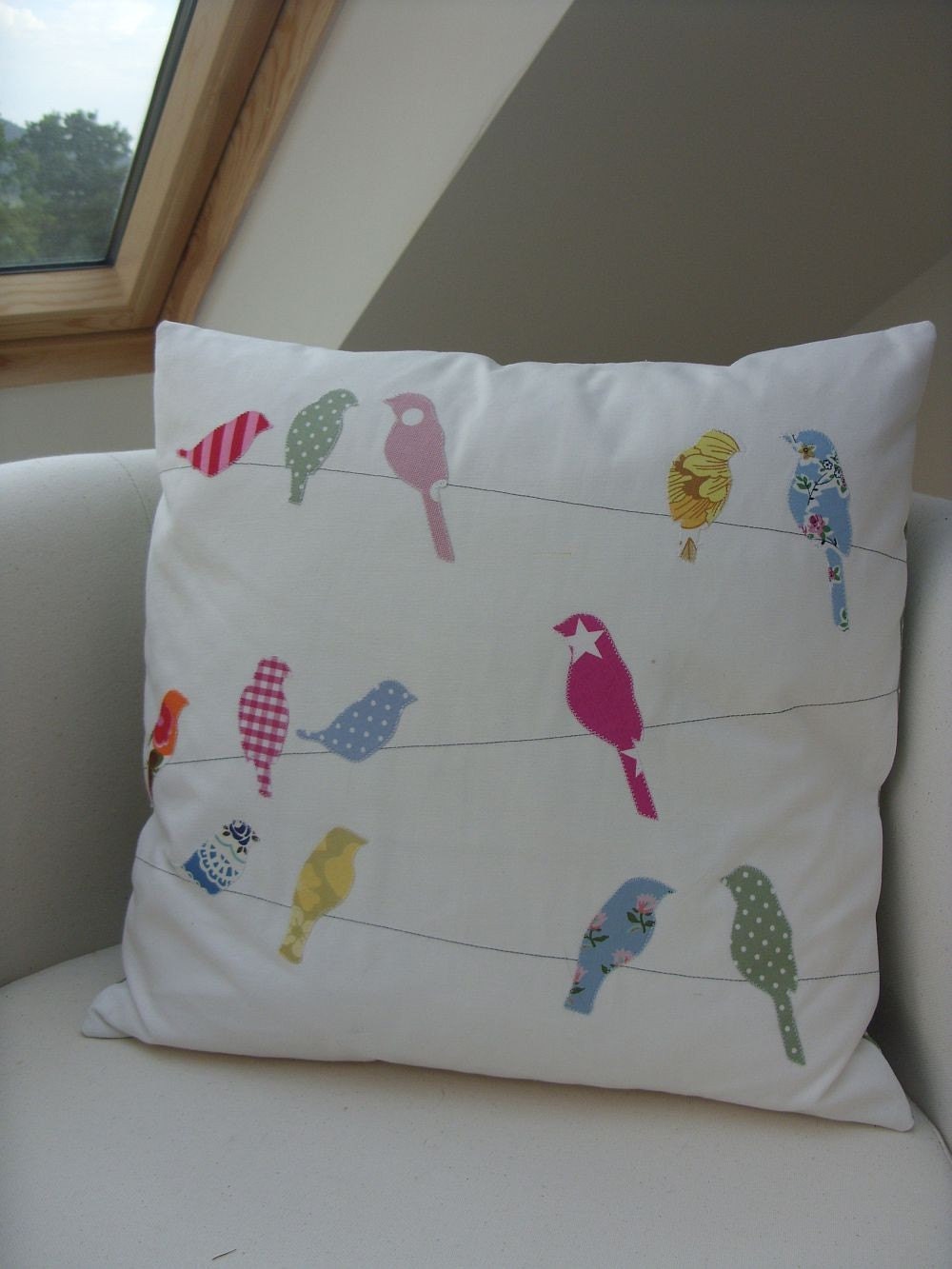
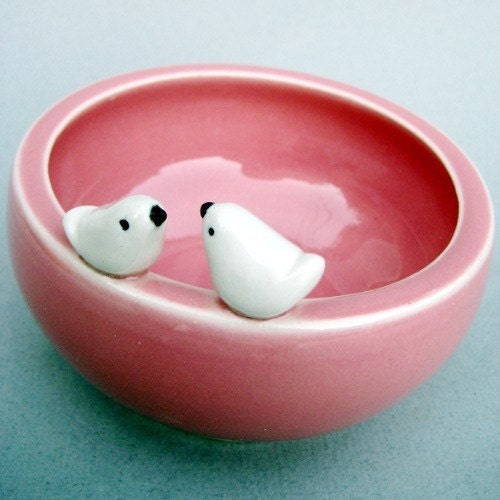
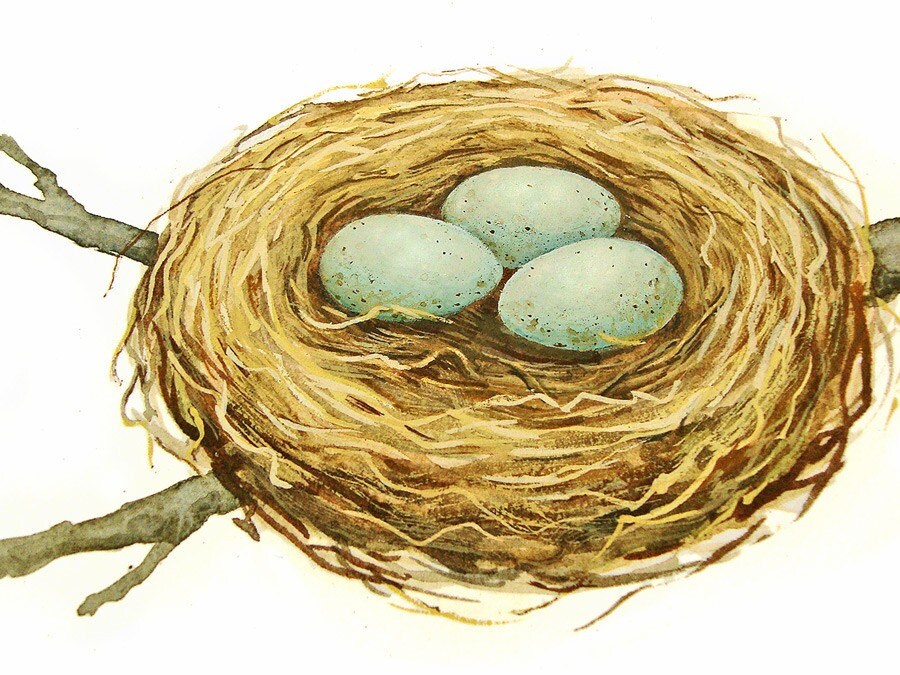
3. Add something bird or nest or egg related - Classic, maybe even a tad cliche, but they nevertheless spell spring.


Pussy willow nest (Martha Stewart)


Birds on a wire cushion (Etsy)


Birds on the rim of a bowl (Etsy)
Watercolour Painting from Etsy

4. Lighten up the colours in your home - By removing dark coloured objects and injecting some fresh bright or pastel shades, you feel like spring has sprung in your home.  Try removing heavy rugs and drapes and dark coloured cushions and objects to make a room seem lighter.  In the following two rooms the furniture and walls are fairly neutral, but yellow, pink, blue, and green rugs, cushions, bedding, and flowers have been added to brighten them up.


Canadian House and Home


Canadian House and Home

5. Add some floral linens, cushions, or  dishes - Changing the cushions, linens, tablecloths, and dishes for fresh bright floral ones is an easy way to create a lighter, brighter spring feel in your home.


Williams-Sonoma
Etsy


Ten Thousand Villages


6. Put away the dinner candles and bring out the flowers - As much as I love having dinner by candlelight, by the time March rolls around I'm ready for a change.  I love putting a pot of narcissus, a basket of crocuses, or a vase full of tulips in the centre of the table.


7. Clean the windows -  See what happens when you clean your windows - the sunshine pours in and you can actually see the ocean.  No really it's true, you just need to clean them really well.


Coastal Living via Location and Lifestyle


8. Make a salad for dinner - Hearty soups and stews seem so wintry so try a light fresh salad for a change and make a cool rainy March day seem more like spring.

Salade Nicoise
How do you lighten and brighten things up to welcome spring?

Tuesday, 1 March 2011

11 Elements of British Colonial Decor in India

Reading A Passage to India, which is set in India in the 1920s, reminded me of my love for British Colonial decor.   The British colonies and trading posts around the world were first established in the 16th and 17th centuries and reached their peak in the 19th and early 20th centuries.  At its largest, the British Empire covered approximately one-quarter of the world.  It truly was the empire on which the sun never set.  As British subjects were sent around the world to the colonies to govern, do business, and protect the home country's interests, they brought with them the traditional decor from home which they intermingled with local materials and styles and adapted them to suit the practical needs of climate and landscape. They produced a unique and beautiful blended colonial style.   


Glenburn Tea Estate in Darjeeling, India


In doing some reading about British Colonial decor, I've come up with eleven hallmarks of the style.  I've tried to focus on this design style as it evolved and adapted to life in colonial India.  So let's have a look at what features describe the Anglo-Indian design style:


1) Dark wood furniture and floors - Ebony, teak, and mahogany are all wood that is readily available in India and is often used, along with other native woods, to build furniture and houses.  Frequently the furniture found in British Colonial rooms is traditionally British in style, but embellished with Indian design.  


The following three photographs are from a working tea estate and now a hotel built in 1859 by the Scottish Tea Company in Darjeeling, India.  The bedrooms are decorated throughout with antique dark wood furniture, some of which have the addition of Indian designs.  


Glenburn Tea Estate, Darjeeling, India


2) Light walls (white or pale colours) - The walls are often painted with light coloured reflective paint, providing a lovely contrast to the dark wood floors and furniture.  The pale colours help make the rooms seem light and airy which is important, at least psychologically, to counteract the oppressive heat.   


Inside Ronny's house on the set of A Passage to India (Source)


Old Harbour Hotel, Kerala, India


3) High ceilings - Since heat rises, high ceilings help to keep the rooms cool.


4) Deep verandahs - These provide a cool place to retire to out of the sun.


Heritage North East India


Raheem Residency, India


5) Tall, rounded windows or garden doors - An elegant touch often found in British colonial decor.


Raheem Residency
The club from A Passage to India


6) Fine accessories such as china, silver, or crystal - Traditionally, some of the elegant accessories would have been brought from England to provide a reminder of home far away and to help maintain a sense of keeping a proper English house.   The sparkle of silver and crystal and the refinement of china lend a lovely contrast with some of the more rustic elements of wood and wicker found in British Colonial decorating.


Dining room from A Passage to India


7) Woven elements - Floors are often covered with woven sisal or reed mats, baskets are used for storage, and caning is used in chairs and furniture. The natural colour of the woven elements provides a nice contrast with the dark furniture and floors.  


Colonial-style safari camp near Pench National Park in India (Architectural Digest)

8) Uniquely Indian elements - Many of the accessories used to decorate are from local artisans. For example, the addition of carved elephants and ornately woven cushions are typical of the Anglo-Indian style.  


Heritage North East India


9) Flowers or greenery - Potted plants, ferns, and palms are placed around the verandas and used to decorate the interior of homes.


Heritage North East India


10) Ceiling fans or Punkahs (large swinging screen-like fans hung from the ceiling and swung by servants or machinery) - Some method of moving the air around was a necessity in the heat of India.  Traditionally they used punkahs. But with the advent of electricity, ceiling fans came into use. Both methods evoke the Anglo-Indian decor style.  

Architectural Digest


Punkahs on the verandah at Brunton Boatyard, India


11)  Hundi Bell Jar Lanterns - These are popular ceiling lights in British colonial homes.   


Brunton Boatyard, India 

Glenburn Tea Estate, Darjeeling, India

****

I also found a few historic photographs that illustrate the decor.  Notice in every photo there is a punkah hanging from the ceiling.


Times of India (source: Bombay Photo Images)
Wealthy merchant's home, India, 1880 (source: Bombay Photo Images)


British Colonial decorating is a look I love!  Any other fans of this decorating style?   


Linked to Inspiration Journey Linky Party at Modern Country Style
Related Posts Plugin for WordPress, Blogger...